
Currensea Review: Is the Free Plan Enough, or Is Pro Worth £39.95?
Currensea's travel debit card reviewed: how it spends from your existing bank account, the three plans and their caps, what it saves against a high-street debit card, the £10 referral, the catches and who should skip it.
Last updated 12 October 2026
Best for
Travellers who bank with a high-street bank such as Barclays, HSBC, Lloyds or NatWest, pay a fee on foreign card spending today, and would rather keep their current account than open a new one or top up a travel card.
If your bank charges a fee abroad, the free Essential plan is a cheap fix: 0.5% over the interbank rate, where a Barclays debit card charges a 2.99% fee on top of Visa's rate. On £2,000 of holiday spending, with no month over £500, that is about £10 against about £60 in fees. Watch the £500 monthly cap, though: above it Essential adds 1%, and a single £3,000 month costs about £40, roughly the Pro fee. Pro and Elite lock you in for 12 months, so only pay for them if you regularly spend well over £500 a month abroad. If you bank with Monzo, Starling, Revolut or Chase, you can't link Currensea at all.
Pros
- Spends from the current account you already have at one of 14 UK banks, with nothing to top up
- Essential has no annual fee and charges 0.5% over the interbank rate on 16 major currencies
- Pro and Elite get the interbank rate on those currencies, with no monthly spending cap
- Works with Apple Pay and Google Pay, and in UK shops as well as abroad
- The credit check is a soft search that leaves no footprint on your credit file
- Rated 4.86 from 8,610 ratings on the App Store and 4.9 on Trustpilot (11 October 2026)
Watch-outs
- Monzo, Starling, Revolut, Chase and other app-based banks can't be linked
- Essential adds 1% on card spending above £500 a month and 2% on cash above £200
- Pro and Elite commit you for 12 months, renew automatically and need 30 days' notice
- No cash from UK machines, and no Section 75 protection
- Payments leave your bank about two business days later, and pending ones can cause declines
- A failed Direct Debit not paid within three business days costs £35, plus a percentage of what you owe
Current related offer
Currensea offer pageAd / referral links — we may earn a bonus when you sign up.
Provider
Currensea
Currensea's £10 needs £100 of foreign-currency spending within 180 days and a card kept for 90 days, which nets about £9.50 on the free Essential plan while delivery stays waived. The catch is the bank list: only 14 UK banks can be linked, so Monzo, Starling, Revolut and Chase customers can't use it. Checks are soft searches with no footprint.
Requirement: £100 in foreign currencies within 180 days of opening; keep the card for 90 days
Medium5-10 minutesPayout Bank transfer to the linked account within 5 working days of meeting the £100 spend
Verified 12 October 2026
Full claim instructions are on the Currensea offer page.
What Currensea is and how it works
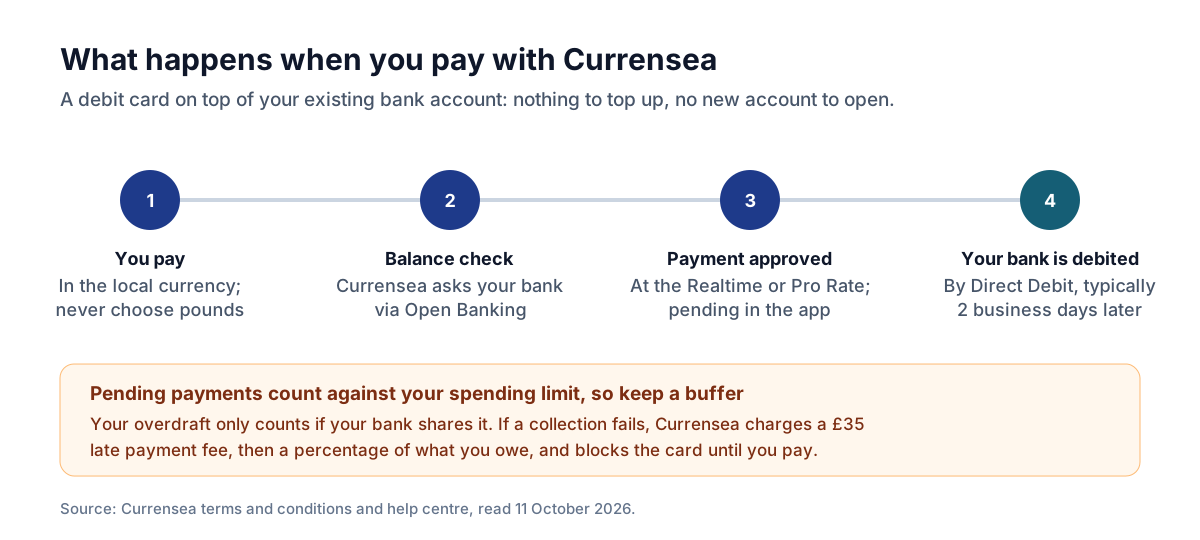
Currensea is a Mastercard debit card, but it is not a bank account, a prepaid card or a credit card. Currensea Ltd, which says it is authorised by the FCA as a payment institution (FRN 843507), links the card to a current account you already hold using Open Banking. When you pay, it checks with your bank that the money is there, approves the payment and then collects it from your account by Direct Debit, which typically takes two business days.
There is nothing to top up and no balance held with Currensea: your money stays in your own bank account until each payment is collected. Refunds go back the same way and take three to seven working days to reach your account, usually at the exchange rate of the original purchase.
Because collection is delayed, payments sit as pending in the app for a couple of days, and pending payments count against your spending limit. Your arranged overdraft only counts towards what you can spend if your bank shares it with Currensea through Open Banking.
Which banks you can link
Currensea works with current accounts at Bank of Scotland, Barclays, Coutts, First Direct, Halifax, HSBC, Lloyds, Nationwide, NatWest, RBS, Santander, TSB, Ulster and Virgin Money. Basic bank accounts (no overdraft, no cheque book) are not supported.
App-based banks are out: Currensea says it does not support Monzo, Revolut, Starling, Chase, Kroo, Atom or Allica. That is less of a loss than it sounds: Currensea itself describes cards like Monzo's, Starling's and Chase's as "fee free", so their holders have less to gain.
You can link up to two bank accounts, but only one is active at a time, and you switch between them in the app. Each account has one card.
Essential, Pro or Elite?
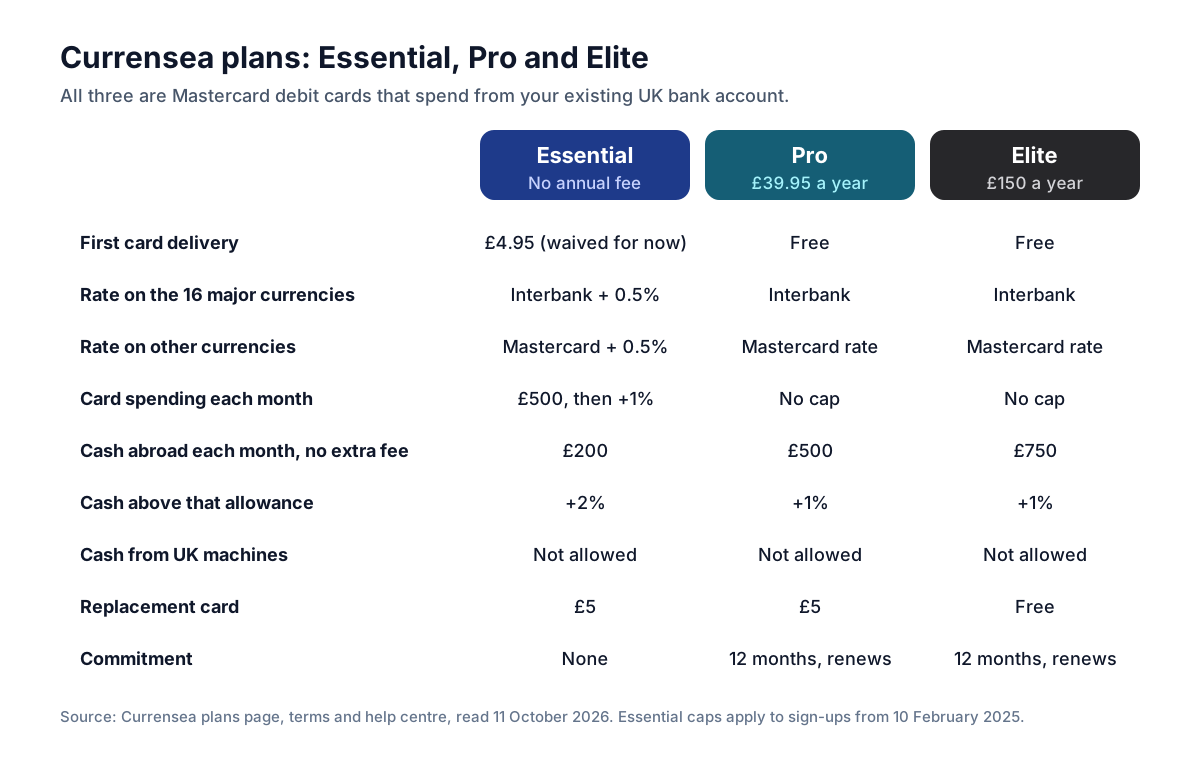
Essential has no annual fee. The first card normally costs £4.95 to deliver, but Currensea has waived that since 29 June 2026 until it withdraws the offer. Pro is £39.95 a year and Elite £150, both with free delivery.
On Essential, card spending abroad is charged at the Realtime Rate (0.5% over interbank) up to £500 a calendar month, then 1% more on top. Cash withdrawals abroad get the same rate up to £200 a month, then 2% more. Those caps apply to anyone who signed up from 10 February 2025 and reset on the 1st of each month.
Pro and Elite get the Pro Rate (the interbank rate itself on the 16 major currencies) with no monthly card-spending cap, and larger cash allowances: £500 a month on Pro and £750 on Elite, then 1% more. Elite also has a free replacement card (£5 otherwise). Both come with partner perks listed on the plans page, such as eSIM data and car hire discounts, with more on Elite. On exchange rates alone Elite is no better than Pro, so its extra £110 or so buys cash allowance and perks.
The exchange rate, in plain English
For 16 major currencies (AUD, CAD, CHF, DKK, EUR, HKD, HUF, JPY, NOK, NZD, PLN, SEK, SGD, THB, USD and ZAR), Currensea tracks the live interbank rate at the moment you pay. Essential adds a 0.5% markup; Pro and Elite add nothing. For the other currencies it uses the Mastercard rate, plus 0.5% on Essential and with no markup on Pro and Elite. There is no extra charge at weekends.
For comparison, so-called fee-free cards use the card scheme's daily rate. Currensea's own analysis of April to June 2025 puts that at 0.72% over interbank on average for Mastercard and 0.66% for Visa. That is Currensea's figure, not an independent one, but it explains why Essential can come out a little ahead of a fee-free card on the major currencies.
When a card machine or cash machine abroad offers to charge you in pounds, say no. The merchant then sets the exchange rate, usually a poor one, and Currensea's rate doesn't apply. Currensea's own advice is the same: never pay in pounds.
What it saves you
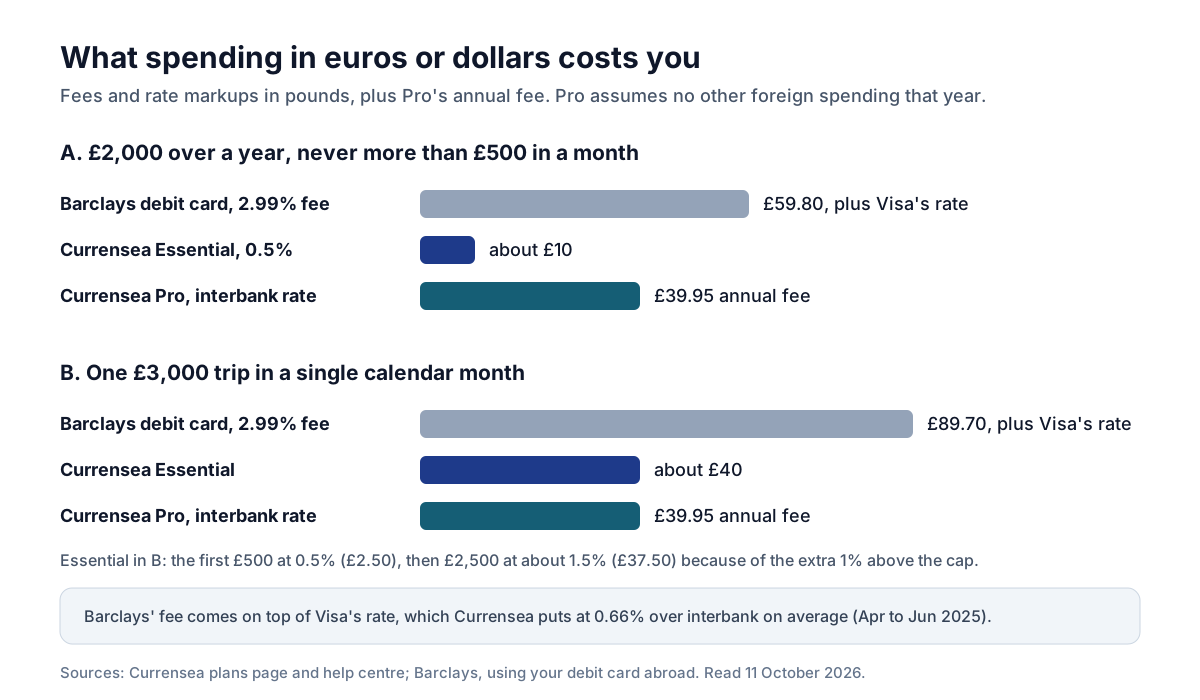
Take £2,000 of card spending in euros or dollars over a year, never more than £500 in one month. On a Barclays debit card, the 2.99% non-sterling fee alone is about £59.80, charged on top of Visa's exchange rate (some Barclays accounts pay 2.75%). On Essential, the 0.5% markup comes to about £10. Pro would cost its £39.95 fee, so at this level Essential is the cheaper plan.
The £500 cap changes the picture. A single £3,000 trip within one calendar month costs about £40 on Essential: £2.50 on the first £500, then about 1.5% on the other £2,500. That is roughly the £39.95 Pro fee, so one big month is enough for Pro to break even. A trip that runs across the end of a month gets two allowances, because the cap resets on the 1st.
A rule of thumb for choosing: on Essential you pay about 0.5% on everything, plus 1% on whatever goes over £500 in any month. If that adds up to more than £39.95 a year, Pro is cheaper. Cash pushes the same way: Essential adds 2% on cash above £200 in a month, Pro only 1% above £500. If you always stay under £500 a month, Pro can't pay for itself on the rate: even £6,000 a year at 0.5% is only about £30.
Currensea says its customers saved an average of £43.20 on Essential, £118.28 on Pro and £195.34 on Elite between December 2024 and November 2025, compared with high-street bank rates. Those are its own figures, so treat them as a guide rather than a forecast.
The £10 referral
Sign up through our link or with code , then spend £100 or more on the card in foreign currencies (any of the 180 Currensea supports) within 180 days of opening your account. Currensea's refer-a-friend page says you both get £10 when you spend £100 abroad. Its written terms only spell out the £10 for the person who referred you, paid by bank transfer to their linked bank account within five working days of the spend being met, so check the offer shows in the app when you sign up.
It isn't paid if you already have a Currensea card or have applied for one before, if refunds take your spend below £100, if the application is fraudulent, or if the card is cancelled within 90 calendar days of applying. You also need to meet the card's usual eligibility, which for referrals includes a good credit history and no payment defaults. The terms give no end date, and Currensea can withdraw offers at any time without notice.
What it's worth: £100 of spending on Essential costs about 50p in markup, so the £10 nets about £9.50 while the delivery fee stays waived. Currensea says the free-delivery offer can be used together with the referral programme. Disclosure: CKKYY7 is GetQuids' own code, so we receive £10 when you qualify.
Cash, spending limits and declines
Cash machines only work abroad: the card can't be used at a UK cash machine, or to buy currency at the Post Office or a bureau de change. Currensea says customers can generally take out up to £1,500 a month from cash machines abroad, depending on eligibility, with the plan allowances above deciding when the extra fee starts.
Separately, Currensea sets your own spending limits from its identity and Open Banking checks, and they can start low. You can see them in the app under Card, set a lower daily limit yourself, and email help@currensea.com to ask for an increase.
Most declines come from the delay in collection. If several payments are still pending, they can use up your limit even when your bank balance looks fine, and Currensea will decline a payment if your bank says the funds aren't there. Some contactless payments are also declined for security checks; Currensea suggests trying chip and PIN instead.
Fees and catches
Failed collections are expensive. Currensea's current terms say that if a Direct Debit fails and you don't pay within three business days, it charges a one-off £35 late payment fee and then a further 40% of the outstanding balance. Its help centre still describes the earlier rules: a £35 fee after seven days and 25% after a month. Either way, the card is blocked until you pay, missed payments can be reported to credit reference agencies, and the debt can go to a collection agency; the help centre adds that after six months Currensea may register a default.
Don't cancel the Direct Debit to stop spending. It doesn't close the account and Currensea still collects what you owe, but the card is frozen automatically and can take about four working days to unfreeze once the mandate is set up again. Currensea's Direct Debits start with CSEA on your statement, and some banking apps wrongly predict them as monthly repeats; ignore those predictions.
The card is not for borrowing, so purchases have no Section 75 protection. If something goes wrong you can ask for a Mastercard chargeback, which usually has to be within 120 days of the payment (or of when a future-dated service such as a flight was due).
It can't be used for online gambling or betting, money transfer services, prepaid cards, loans, cryptocurrency or other investments, among other blocked categories. A replacement card costs £5, or nothing on Elite.
What users complain about
On 11 October 2026 the Currensea app was rated 4.86 from 8,610 ratings on the UK App Store and 4.75 from 3,024 on Google Play. Currensea's Trustpilot profile scored 4.9 from about 23,500 reviews, 94% of them five-star, and the company replies to almost all negative reviews there.
The low-rated reviews repeat a few themes: payments declined while there is money in the account (usually pending collections or an overdraft the bank doesn't share), cards frozen for security checks while abroad, low starting spending limits, bank linking failing with some banks such as Santander and HSBC, being locked out of the app, and surprise at annual fee renewals on paid plans. Support is by email or a contact form with an answer bot; the phone number takes voicemail only, and some reviewers find replies slow.
Applying, activating and cancelling
You need to be 18 or over, with a valid mobile number, an active current account at a supported bank with online or mobile banking, and no active County Court Judgments. You must live in the UK, France, Spain, Italy, Germany, Belgium, Ireland, the Netherlands or Cyprus, but the linked account still has to be with a supported UK bank. Currensea's credit and identity checks are soft searches that don't leave a footprint on your credit file.
You apply in the app: download it, link your bank and order the card. When it arrives, activate it in the app with a six-digit code sent to your email and the three-digit CVC from the back of the card. Apple Pay and Google Pay only work once the physical card is activated.
To leave Essential, request closure in the app under your account settings, or email help@currensea.com; Currensea checks there is nothing left to collect before closing. Pro and Elite commit you for 12 months and renew automatically: give at least 30 days' notice before the end of the term to stop the renewal. A downgrade only takes effect after the term ends, with no pro-rata refund of the fee.
Who should get it, and who should skip it
Get Essential if you bank with one of the supported high-street banks, pay a foreign transaction fee on your debit card today, and spend up to £500 a month abroad or online in foreign currencies. Consider Pro if you regularly spend well over £500 in a month abroad or need more than £200 a month in cash. Elite only makes sense if you will use its perks.
Skip it if you mainly bank with Monzo, Starling or Chase: you can't link them, and Currensea itself calls their cards "fee free", so the saving would be small. Skip it too if you want Section 75 cover for big purchases, need cash from UK machines, or keep your current account close to zero, because the delayed collection makes declines and late fees more likely.
Collect Marriott Bonvoy points? Currensea also issues the Marriott Bonvoy Debit Card, which works the same way but has an annual fee and earns hotel points and elite status.
FAQ
- Is Currensea a credit card or a prepaid card?
- Neither. It is a Mastercard debit card linked to your existing current account through Open Banking. Payments are collected from that account by Direct Debit, typically two business days later, and there is nothing to top up.
- Can I link a Monzo, Starling, Revolut or Chase account?
- No. Currensea only links to current accounts at 14 UK banks, including Barclays, HSBC, Lloyds, Nationwide, NatWest and Santander. Basic bank accounts aren't supported either.
- Does applying affect my credit score?
- Currensea runs soft searches that don't leave a footprint on your credit file. You still need no active County Court Judgments, and the referral terms ask for a good credit history with no payment defaults.
- Is Pro worth £39.95 a year?
- On exchange rates alone, only if you go well over Essential's £500 monthly cap. One £3,000 month on Essential costs about £40 in markup and fees, roughly the Pro fee; if you always stay under £500 a month, Essential is cheaper. Pro also commits you for 12 months.
- Can I use Currensea in the UK?
- Yes, for purchases online or in shops, the same as your normal debit card. You can't use it at UK cash machines.
- Why was my card declined when I have money in my account?
- Usually because recent payments are still pending and count against your spending limit, or because your bank doesn't share your overdraft with Currensea. Leaving a buffer in the linked account helps.
- How do I get the £10 referral bonus?
- Sign up with code CKKYY7 and spend £100 or more in foreign currencies within 180 days of opening the account. Don't cancel the card within 90 days of applying. Currensea's page says you both get £10, but its written terms only describe the referrer's reward, paid within five working days.
- How do I cancel?
- On Essential, request closure in the app or email help@currensea.com. Pro and Elite run for 12 months and renew automatically unless you give at least 30 days' notice, with no pro-rata refund. Cancelling the Direct Debit alone doesn't close the account.