
Revolut Business Review UK: Is £10 to £125 a Month Worth It for Your Company?
Revolut Business reviewed for UK limited companies: who holds your money, who can and can't open one, the Basic, Grow and Scale plans and their fees, what a year really costs, savings, what users complain about, and why its referral link pays the referrer rather than your business.
Last updated 12 October 2026

Best for
UK limited companies and LLPs that exchange currency or pay suppliers abroad most months, want cards and spending controls for a team, and are happy to bank entirely through an app, with no cash or cheques.
Revolut Business earns its fee when your company deals in other currencies. There is no free plan for companies: Basic costs £10 a month and includes £1,000 of exchange at the interbank rate, 10 free UK transfers and no free international ones. For a company exchanging £5,000 and sending four international payments a month, Basic works out at about £648 a year against £360 on Grow paid annually, and Grow costs less than Basic once you exchange more than about £4,333 to £5,167 a month. If your company only deals in pounds, you are paying £120 a year mainly for the app and the cards. Sole traders can't open it at all; Revolut Pro is the route for them. And don't open it for a bonus: our link pays a reward to GetQuids, not to your business.
Pros
- The account is with Revolut Bank UK, a licensed UK bank, so eligible deposits are FSCS-protected up to £120,000
- Exchange at the interbank rate within a monthly allowance: £1,000 on Basic, £15,000 on Grow and £60,000 on Scale
- Balances in 25+ currencies, UK and international account details, and free instant transfers to other Revolut accounts
- Unlimited team members at no extra cost, with up to 50 virtual cards each and controls on limits, categories and currencies
- Savings at 2.15% to 3.3% AER (variable) from Grow up, with interest paid daily and same-day withdrawals before noon on business days
- App-based application, and Revolut aims to review it within 24 hours
Watch-outs
- No free plan for companies: Basic costs £10 a month (£120 a year) and includes no free international transfers
- Sole traders, charities, co-ops, trusts and unincorporated partnerships can't open one
- Beyond the allowance: 0.6% on exchange (1% outside market hours), £5 per international transfer and 2% on every cash withdrawal
- No cash or cheque deposits, and savings sit with a third-party bank rather than with Revolut
- Accounts restricted during reviews and chat-only support are among the most common complaints in app reviews
- Joining through our referral link earns your business nothing: only the person who invites you can be paid
Current related offer
Revolut Business offer pageAd / referral links — we may earn a bonus when you sign up.
Provider
Revolut Business
Open a Revolut Business account through GetQuids' invite link only if the account suits your company. Under Revolut's Customer to Business referral terms the invited business gets no reward.
Requirement: None: there is no reward for the invited business
MediumRevolut aims to review applications within 24 hours; complex ones take longerPayout No reward for the invited business under Revolut's Customer to Business referral terms
Verified 12 October 2026 · Ends 27 October 2026
Full claim instructions are on the Revolut Business offer page.
What Revolut Business is and who holds your money
Revolut Business is an app-based business current account. Its Business Terms are an agreement with Revolut Bank UK Ltd (FRN 981170), a bank authorised by the Prudential Regulation Authority and regulated by the FCA and the PRA. Eligible deposits are protected by the FSCS up to £120,000, and that limit covers all your eligible deposits with Revolut Bank UK together.
You get balances in more than 25 currencies, UK and international account details, free instant transfers to other Revolut accounts, scheduled and recurring payments, and transfers to card numbers. Currency is exchanged at the interbank rate within a monthly allowance, with fees above it, and the app shows any fee before you confirm.
Not everything in the app is a Revolut Bank deposit. Money you move into Business Savings is placed with a third-party bank, so its protection works differently; the savings section below explains how.
Who can open one, and why sole traders can't
Revolut's help centre lists the supported business types as private limited companies, LLPs, limited partnerships, PLCs and partnerships. Sole traders and freelancers, unincorporated partnerships, charities, co-operatives, companies limited by guarantee, trusts, foundations, funds and the public sector are not supported, and anything else is at Revolut's discretion.
The Business Terms muddy this by listing "new sole traders" among those who can apply. That contradicts the help centre, so plan on the help centre's list. If you are a sole trader, Revolut points you to Revolut Pro instead, which you add to a personal Revolut account and which starts at £0 a month; our Revolut review covers it.
The terms also rule out insolvent businesses and a long list of industries, including adult entertainment, gambling and binary options, weapons, cannabinoids, debt collection, crowdfunding, holding client money and some financial services, plus anything outside Revolut's risk appetite. Each business can have only one Business Account, and you can't open a new one if Revolut previously closed yours, unless you are applying in a different capacity.
The plans: Basic, Grow and Scale
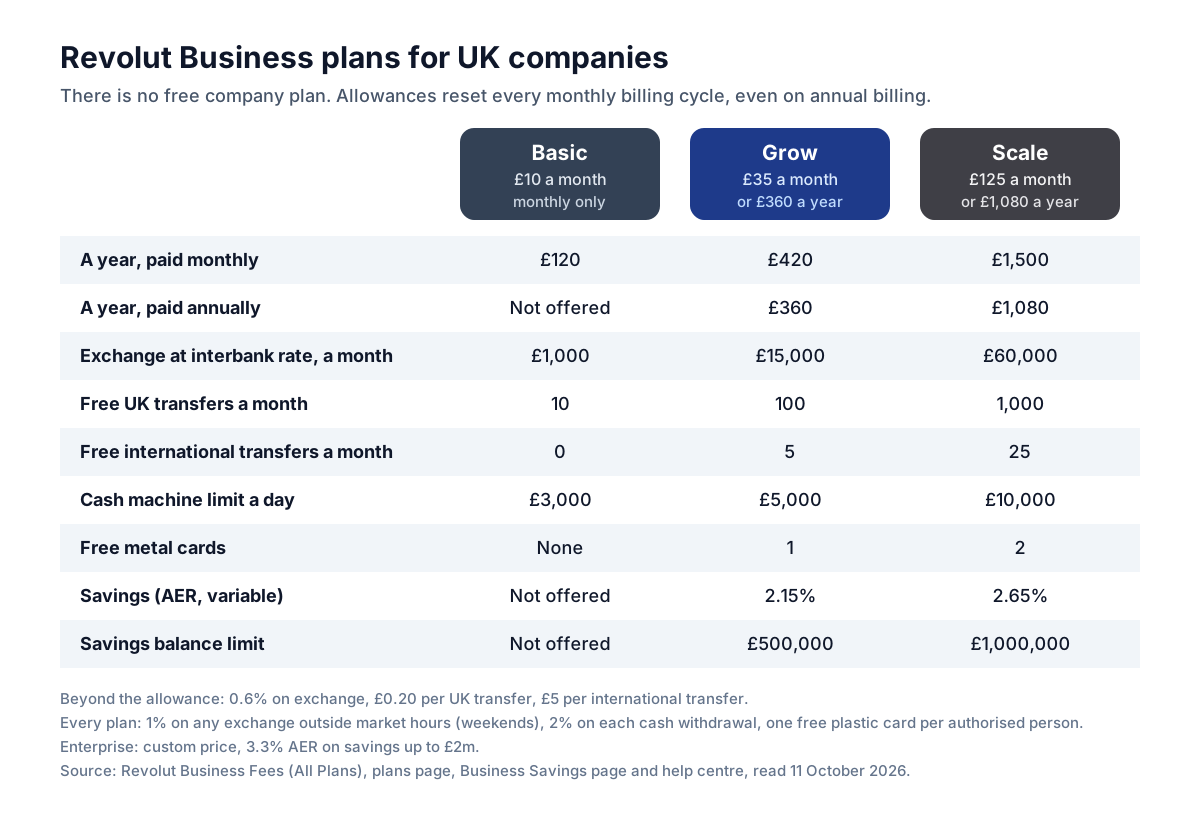
Every company plan costs money. Basic is £10 a month and can only be paid monthly. Grow is £35 a month or £360 a year (£30 a month), and Scale is £125 a month or £1,080 a year (£90 a month). Enterprise is priced individually. Whichever way you pay the plan fee, all other fees are billed monthly and the allowances reset at the start of each monthly billing cycle.
The plans differ mainly in their allowances: how much you can exchange at the interbank rate each month (£1,000, £15,000 or £60,000), how many UK transfers are free (10, 100 or 1,000) and how many international ones (none, 5 or 25). Grow adds bulk payments to up to 1,000 recipients, custom spending approvals, account permissions, one free metal card and access to Savings. Scale adds a second free metal card, your logo or design on the physical cards, and a higher savings rate and limit.
One inconsistency to know about: Revolut's plans page shows a £5,000 daily cash limit on Basic, while the fee schedule, which forms part of your agreement, says £3,000. Go by the fee schedule.
Fees once the allowance runs out
Exchange above your monthly allowance costs 0.6% on top of the interbank rate, and exchange outside foreign exchange market hours costs 1% on every plan, even within your allowance. Revolut's help centre puts that window at the weekend, from 17:00 EST on Friday to 18:00 EST on Sunday.
After the free transfers, each UK transfer costs £0.20 and each international transfer £5. A SWIFT transfer where you pay all the charges (OUR) is £20 on Basic, Grow and Scale, and US ACH transfers cost 0.2% with a £0.50 minimum.
Cash machines cost 2% on every withdrawal, on every plan, so taking out £200 costs £4. Each authorised person gets one plastic card free; Revolut's per-plan fee pages put extra plastic cards at £4.99 each, and the app shows the fee and any delivery charge before you order. Extra metal cards beyond your plan's allowance are £49 each, and if you close the account or downgrade within three months of starting your plan, you have to pay for the metal card.
Add-ons are charged per active team member per month: Expenses at £8, from the first expense someone submits, and Payroll at £3. If you take card payments, online payments from UK Visa and Mastercard consumer cards cost 1% + £0.20 and in-person ones 0.8% + £0.02; American Express consumer cards cost 1.7% and other cards 2.8% online or 2.6% in person, plus the same £0.20 online or £0.02 in-person flat fee. Each chargeback a customer wins costs £15.
What it costs in practice
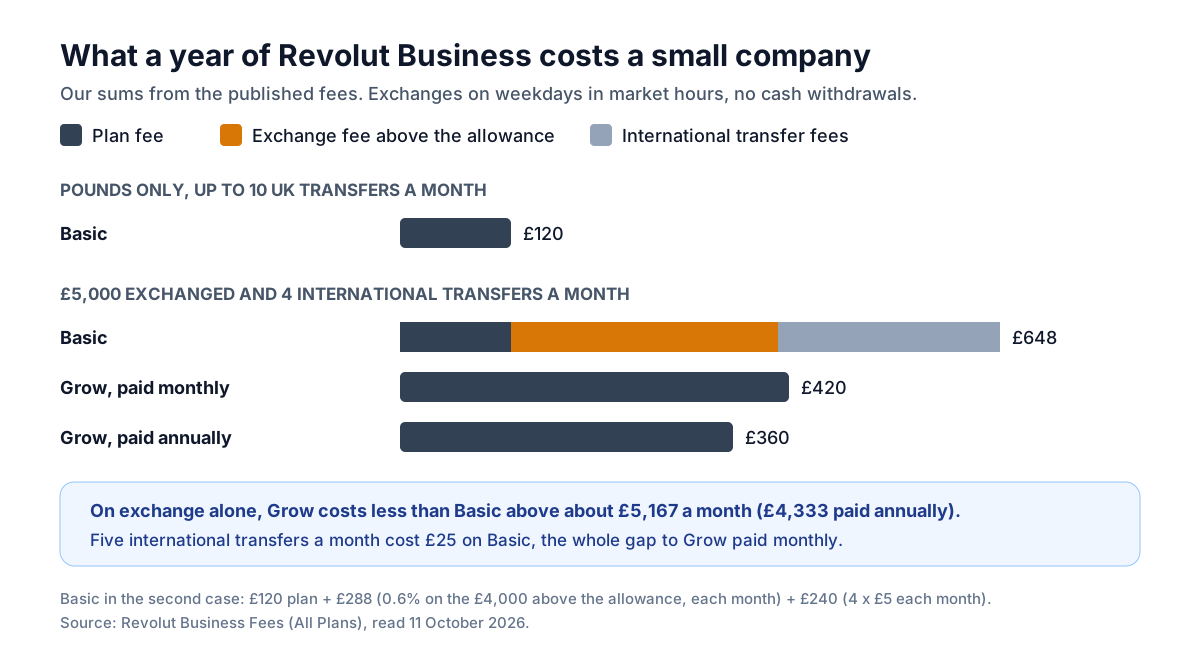
Take a small company that only deals in pounds and makes no more than 10 UK payments a month. Basic covers it for £120 a year, with 20p for every payment after the tenth and no interest on the balance.
Now add £5,000 of currency exchange and four international supplier payments a month. On Basic that is £10 for the plan, £24 in exchange fees (0.6% of the £4,000 above the allowance) and £20 for the four transfers: £54 a month, or £648 a year. Grow covers all of it within its allowances for £420 a year paid monthly, or £360 paid annually.
The switch point comes sooner than many people expect. On exchange alone, Grow paid monthly costs less than Basic above about £5,167 a month, and Grow paid annually above about £4,333. International payments get there faster: five a month on Basic cost £25, the whole difference between Basic and Grow paid monthly. Weekend exchange costs 1% whatever plan you are on, so £1,000 exchanged on a Saturday costs £10.
Paying Grow annually saves £60 a year but ties you in. Revolut's Grow and Scale fee pages say it only refunds the plan if you downgrade within 14 days of the plan starting without having used any of its benefits, and its plans FAQ says closing the account cancels the subscription at the end of the current monthly or annual billing cycle.
Cards, team tools and what's missing
Every plan includes unlimited team members at no extra cost, up to 50 virtual cards and up to three physical cards per team member (fees may apply for the physical ones), and card controls for limits, categories, accounts, currencies and spending periods. Cards spend in more than 150 currencies, drawing on a balance you already hold or exchanging as you pay. Bill payments and purchase orders are included on every plan.
Expense management is the paid add-on most teams will notice: £8 per active team member a month. On a team of five who all submit expenses, that is £40 a month on top of the plan.
What it doesn't do: Revolut Business doesn't accept cash or cheque deposits, and suggests asking whoever sent a cheque to pay by bank transfer instead. There is no overdraft unless you sign a separate agreement for one, and we found no business overdraft or loan on the UK plan pages we read. If you take cash from customers or still receive cheques, you will need a second account elsewhere.
Savings: the interest is real, but Revolut doesn't hold the money
Grow pays 2.15% AER, Scale 2.65% and Enterprise 3.3%, all variable, on balances up to £500,000, £1 million and £2 million. Basic has no savings. Interest is worked out and paid daily, and Revolut says it gives at least 30 days' notice before a rate cut.
The money doesn't stay with Revolut Bank. It is placed with a third-party Deposit Account Provider, with Flagstone acting as trustee. Revolut says it is FSCS-protected up to £120,000 only if that provider offers FSCS cover and your business is eligible, and anything above £120,000 isn't protected. Instructions received before 12:00 on a business day, withdrawals included, are carried out the same day.
Worked example: £25,000 at Grow's 2.15% AER earns about £538 a year before tax, against the extra £240 a year that Grow costs over Basic when paid annually. So a company with a steady cash buffer can cover Grow from interest, but only while the rate holds, and that money sits with a different bank from your current account.
The referral link: your business gets nothing
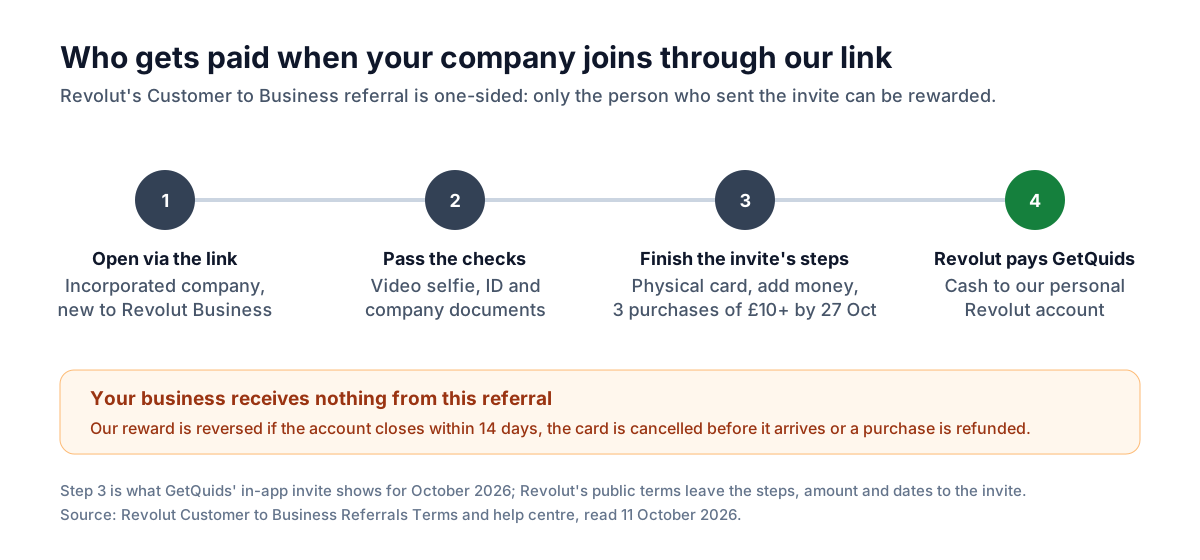
Our link is Revolut's Customer to Business referral. Revolut sends these invites to selected personal customers and pays the reward in cash to the inviter's personal account. Its terms describe "a one-sided campaign, where only the Revolut customer who was invited to refer a friend (not the Invitee) can be awarded any Reward/s". In plain terms: opening through our link gives your business nothing.
For the inviter to be paid, the business must be incorporated, completely new to Revolut Business with no current or past Business account or user profile, and not linked to one. It then has to complete the steps in the inviter's invite. Ours lists, for October 2026: order a physical card, add or receive money, and make three purchases of at least £10 each (£30 in total) by 27 October 2026. Revolut's public terms leave the steps, the reward and the dates to each invite, so there is no public page confirming them. The reward is reversed if the business closes the account within 14 days, cancels the card before it arrives, or cancels or refunds the purchase. Revolut's sign-up page also says it shares very limited information about your account set-up and activity with the person who referred you, to keep them up to date on their reward.
Disclosure: the link on this page is GetQuids' own invite, so if your company opens an account through it and completes those steps, Revolut pays a cash reward into our personal Revolut account. Revolut sets the amount for each inviter and doesn't publish it.
What users complain about
On 11 October 2026 the Revolut Business app was rated 4.9 from about 61,600 ratings on the UK App Store and 4.8 from about 47,100 reviews on Google Play for phones, where it has more than a million downloads. Revolut's Trustpilot score of 4.7 from about 471,000 reviews covers all of Revolut, not just Business.
The high averages hide a split. Of the 150 most recent UK App Store reviews, written between January and October 2026, 107 gave five stars and 41 gave one. The one-star reviews repeat the same themes: accounts restricted or money frozen for weeks during reviews with no reason given, support only through scripted chat with no phone line, applications rejected without explanation or ID scans failing, referral and sign-up rewards not paid or expiring, card takings held for up to 14 days or a reserve held for 90 days, and Basic moving from free to £10 a month with few free transfers.
A freeze hurts a business more than a person, because payroll and supplier payments stop with it. If Revolut becomes your main business account, keep a second account at another bank with enough in it to cover your essential payments for a while.
Opening and closing
You apply online or in the app. Have ready a video selfie and ID for each person who needs verifying, the certificate of incorporation, proof of what the business does (a website, a supplier contract, or a sales invoice with a matching bank statement), proof of your operating address, and a document listing all directors and shareholders who own more than 25%. Revolut aims to review applications within 24 hours, longer for complex ones, and comes back to you if it needs more.
Changing plan: an upgrade can start straight away or at the next billing cycle, and a downgrade starts at the next billing cycle. If you change plan mid-cycle, the cycle restarts with the new allowances and the monthly fee you have already paid isn't refunded.
Closing: if your business is a micro-enterprise (fewer than 10 staff and a turnover or balance sheet of no more than €2 million), you can cancel within 14 days of opening and Revolut won't charge you. After that you can close at any time in the account settings in the app or on the web, or by emailing support@revolut.com. Either way, first move out every balance, including anything held with other Revolut companies, and settle any fees, so the account is at zero.
Revolut can close your account with two months' notice, or at least 90 days' notice for accounts opened on or after 28 April 2026, and for those newer accounts it can only close immediately in limited cases set by law, such as criminal activity or inaccurate information. Instead of closing an account, it can also restrict specific features where it believes this is needed to prevent misuse or fraud.
Who should get it, and who should skip it
Consider it if your company is a limited company or LLP that exchanges currency or pays overseas suppliers most months, if you want cards with limits and approvals for a team without paying per card, or if you keep a cash buffer that could earn interest on Grow. Grow pays for itself at about £4,333 to £5,167 of exchange a month, or at five international payments.
Skip it if you are a sole trader (look at Revolut Pro instead), a charity or another unsupported type; if you handle cash or cheques; if your company only deals in pounds and you want an account with no monthly fee; or if a frozen account for a few weeks would stop you paying staff and you have no second account. And ignore the referral angle: it only pays the person who invites you.
FAQ
- Is Revolut Business a real bank account?
- Yes. The account is with Revolut Bank UK Ltd, a UK bank authorised by the PRA and regulated by the FCA and the PRA, and eligible deposits are FSCS-protected up to £120,000. Money in Business Savings is held by a third-party bank instead.
- Is there a free Revolut Business plan?
- Not for companies. Basic is the cheapest at £10 a month. Sole traders can't open Revolut Business; Revolut Pro, which starts at £0 a month, is Revolut's option for them.
- Does my business get a bonus for joining through a referral link?
- No. Revolut's Customer to Business referral is one-sided: only the person who sent the invite can be rewarded. If your company uses our link and completes the steps, Revolut pays GetQuids.
- Which plan should I choose?
- Basic if you mostly deal in pounds and make up to 10 UK payments a month. Grow once you exchange more than about £4,333 to £5,167 a month, make five or more international payments, or want to earn interest. Scale only at much higher volumes: it includes £60,000 of exchange and 25 international payments a month.
- Can I pay in cash or cheques?
- No. Revolut Business doesn't accept cash or cheque deposits, and every cash withdrawal costs 2%.
- How long does it take to open an account?
- Revolut aims to review an application within 24 hours, longer for complex ones. Have your ID for a video selfie, the certificate of incorporation, proof of business activity and operating address, and a list of directors and shareholders owning more than 25% ready.
- What if Revolut freezes my account?
- Revolut can restrict features of an account where it believes this is needed to prevent misuse or fraud, and app reviewers report freezes lasting weeks. For accounts opened from 28 April 2026 it must give at least 90 days' notice to close an account, except in limited cases. Keep a second business account at another bank.
- Can I cancel?
- A micro-enterprise can cancel within 14 days of opening at no charge. After that, close the account in the app or by emailing support@revolut.com once every balance is at zero; the plan runs to the end of its billing cycle.